Let’s be real: homework can feel like a drag sometimes. You sit there staring at your books, wondering if any of it’s actually sticking. Maybe you’ve tried all the usual advice—“study in a quiet place,” “take breaks,” blah blah blah—but it still feels like a slog. Here’s the thing: not everyone learns the same way. Shocking, right? What works for your buddy might not work for you, and that’s totally fine. The key is figuring out your learning style. Once you crack that code, homework starts to feel less like pulling teeth and more like, well, a little less painful. This will also cut the need of homework helpers by more than half.
What the Heck Is a Learning Style?
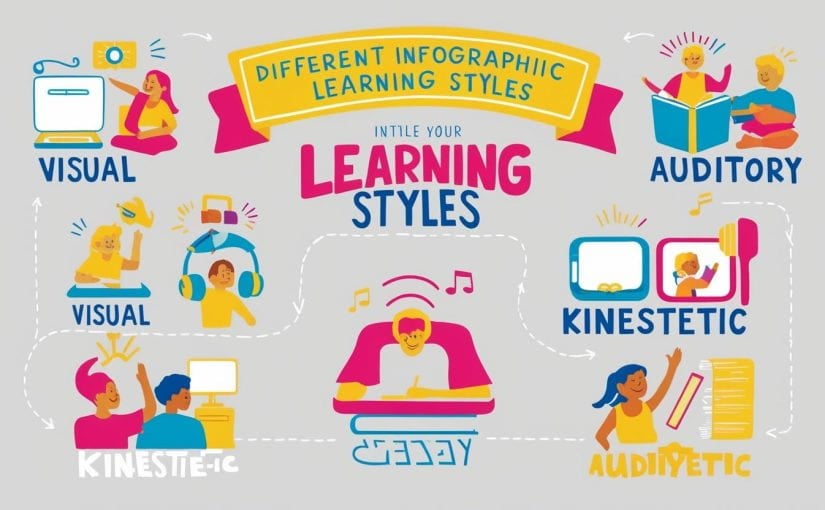
Okay, so learning styles are basically how your brain prefers to absorb and process info. Think of it like a playlist—some people vibe with classical, others are all about that heavy metal. There are a few main learning styles people talk about:
- Visual: You learn best with pictures, diagrams, and videos.
- Auditory: You prefer to hear things—lectures, podcasts, or even reading out loud.
- Kinesthetic: Hands-on learning is your jam. You’ve gotta do it to learn it.
- Reading/Writing: You love good ol’ fashioned text—notes, books, and essays.
Now, you might not fit perfectly into one box. Most people are a mix, and that’s cool too. The trick is figuring out which one feels most “you” and running with it.
Step 1: Spot Your Style
So, how do you know what your learning style is? It’s not like your brain comes with an instruction manual (though wouldn’t that be nice?). Here’s a quick cheat sheet:
- Do you doodle while taking notes? Visual might be your thing.
- Do you remember song lyrics after hearing them once? Welcome to the auditory club.
- Do you love building stuff or figuring things out with your hands? Kinesthetic vibes all the way.
- Do you write stuff down just to remember it? You’re a reader/writer type.
If you’re still not sure, think back to the last time you learned something new. How did it click? That’s probably your style.
Quick Tangent: I remember in high school, my best friend swore by flashcards. She’d have these colorful little cards for everything. Meanwhile, I couldn’t stand them. I’d try, get bored in five minutes, and end up sketching little cartoons instead. Turns out, I’m more of a visual learner. Who knew?
Step 2: Match Your Style to Your Homework
Once you’ve nailed down your learning style, the next step is tweaking your homework routine to match. Here’s how:
For the Visual Learners
If you’re all about seeing stuff, make your homework as visually interesting as possible.
- Mind maps: Ditch the boring bullet points and draw connections instead. Think spiderwebs but smarter.
- Color-code everything: Highlighters are your BFF. Assign colors to different topics or ideas.
- Videos > Text: If there’s a YouTube video or animation on the topic, go for it. Sometimes watching someone explain something beats reading the textbook five times.
Pro Tip: Ever tried turning your notes into comic strips? It sounds silly, but it works. Plus, it’s kinda fun.
For the Auditory Learners
If your ears do the heavy lifting, lean into sounds and spoken words.
- Record yourself: Read your notes or key points out loud, then play them back. It’s like having your own personal podcast.
- Teach someone else: Explain concepts to a friend, your sibling, or even your dog. Saying it out loud helps it stick.
- Background music: Some auditory learners find that soft instrumental music boosts focus. Just avoid anything with lyrics—it’s too distracting.
Funny Story: One time, I recorded myself explaining algebra equations (nerd alert, I know). My little brother overheard and started mimicking me. Fast forward a week—he’s reciting my notes better than I was. Guess it worked for both of us!
For the Kinesthetic Learners
You need to move to learn. Sitting still feels like torture, right?
- Use objects: For math, use coins or blocks to visualize problems. For science, do experiments if you can.
- Take movement breaks: Study in short bursts, then get up and move around. Bonus points if you review notes while pacing.
- Interactive tools: Use apps, games, or anything that lets you actively engage with the material.
Side Note: One of my friends swore by doing homework on a yoga ball. She’d bounce around while solving equations. Did she look ridiculous? Absolutely. Did it work? Totally.
For the Reading/Writing Learners
If you’re a bookworm at heart, stick to what works for you—words, words, and more words.
- Rewrite your notes: The act of writing helps you remember.
- Summarize: Break down big chunks of text into your own words.
- Read aloud: Sometimes hearing your own voice can make things click better.
Random Idea: Ever tried writing a mini story about your homework topic? Like, turn that history lesson into a dramatic soap opera. It’s weirdly effective.
Step 3: Mix It Up
Here’s the thing: even if you’ve got a dominant learning style, it doesn’t hurt to mix in others. Sometimes combining strategies can give you that extra edge. For example:
- Draw a diagram (visual) and explain it out loud (auditory).
- Read a chapter (reading/writing), then do a hands-on experiment (kinesthetic).
It’s like cross-training for your brain.
Step 4: Cut Yourself Some Slack
Listen, nobody’s perfect. Even if you figure out your learning style, there’ll still be days when homework feels like climbing Mount Everest. That’s normal and you can go for academic writing providers in USA like New Assignment Help assuming them as your Sherpa! The goal here isn’t to make everything magically easy; it’s to make it a little more manageable.
If you’re having an off day, take a breather. Go for a walk, grab a snack, watch a funny video—whatever resets your brain. Then, come back to it with fresh eyes.
Why Bother Learning About Learning Styles?
Good question. At the end of the day, understanding how you learn isn’t just about homework. It’s about knowing yourself. When you know how your brain works, you can tackle challenges in a way that plays to your strengths. That’s not just useful in school—it’s a life skill.
Final Thoughts
So, there you have it: the lowdown on learning styles and how they can help you slay your homework. It might take some trial and error to figure out what works best for you, but that’s part of the fun (or at least, the process).
And hey, don’t stress about getting it “right.” Learning isn’t a one-size-fits-all thing. Whether you’re color-coding notes, recording your voice, or bouncing on a yoga ball, the important thing is that you’re learning.