Top Homework Help Websites in the USA: A Handy Guide for Students

Alright, folks. Let’s face it — homework can be a real drag. Whether it’s a pile of math problems, that 5,000-word history essay, or a science lab report you barely understood, schoolwork has a way of making us all groan. But hey, good news: we live in the age of the internet! That means if you’re struggling, you’ve got options — and plenty of them.

This article’s all about the best homework help websites in the USA. We’ll cover what makes them great, their quirks, and why one of them (spoiler alert: New Assignment Help) might just become your new best friend. Buckle up, students — this ride’s about to get fun!

What to Look for in Homework Help Sites

Before we dive in, let’s get one thing straight. Not all homework help sites are created equal. Some are top-tier lifesavers, while others? Well, let’s just say they’re not worth your time (or your cash).

Here’s what you wanna keep an eye out for:

  1. Expert Tutors: You’re gonna wanna make sure these folks know what they’re talkin’ about. Degrees, certifications, real-world experience — the whole nine yards.
  2. 24/7 Availability: Late-night cram sessions are real. Your homework help site better be ready to roll when you are.
  3. Affordable Pricing: Nobody’s got time for overpriced services, especially when you’re a broke college student. (Been there, done that.)
  4. Easy-to-Use Interface: If the site’s clunky or confusing, it’s gonna make an already stressful situation even worse.
  5. Custom Solutions: No cookie-cutter answers here, people. You want tailored help that’ll actually make sense for your assignment.

Got it? Cool. Let’s move on.

The Contenders: Popular Homework Help Websites

Alright, let’s break down some of the most popular homework-help sites in the US.

1. Chegg

Chegg’s been around for a hot minute, and there’s a reason it’s so popular. They offer textbook rentals, expert Q&A sessions, and even online tutoring. The catch? It’s a subscription service, and it ain’t cheap. Plus, some users complain the answers can feel a little… generic.

2. Khan Academy

Khan Academy’s like the friendly neighborhood tutor you wish you had. It’s free, loaded with video lessons, and great for brushing up on concepts. The downside? It’s self-paced, so if you’re stuck on something specific, you might not find exactly what you need right away.

3. Course Hero

Course Hero’s another big name in the game. They’ve got study guides, notes, and a massive library of resources. But here’s the rub: a lot of their content’s user-generated, which means quality can be hit-or-miss. And unlocking content often requires uploading your own stuff or paying up.

4. Tutor.com

This one’s all about the live tutoring experience. It’s got certified tutors, and it’s available 24/7. Sounds great, right? It is, but the hourly rates can add up quick. Not ideal if you’re on a tight budget.

5. New Assignment Help

Ah, here we go. The crown jewel of homework help. New Assignment Help is where the magic happens. They’ve got a killer team of experts ready to tackle pretty much any subject you throw at them. Their pricing’s super reasonable, and they’re all about customized solutions. Plus, their website’s user-friendly, so you won’t be pulling your hair out just trying to navigate it.

Why New Assignment Help Stands Out

Alright, let’s talk specifics. Why’s New Assignment Help so awesome? Let me count the ways:

  1. Experts Galore: Their tutors are legit. We’re talkin’ subject matter experts with advanced degrees. You’re not just getting some random person Googling answers for you.
  2. Affordable for Real: Unlike some of the other sites we mentioned, New Assignment Help won’t leave your wallet crying. They’ve got fair pricing and even offer discounts for regular users. (Pro tip: Keep an eye out for seasonal deals!)
  3. Super Fast Turnaround: Deadlines? No problem. These guys are pros at delivering top-notch work even when you’re in a pinch.
  4. Plagiarism-Free Work: Nobody wants to get busted for copying. New Assignment Help ensures every solution is original and tailored to your needs.
  5. Customer Support That’s Actually Helpful: Got questions? Their support team’s got answers — and they’re super friendly, too.

A Quick Tangent: Why Homework Help Matters

Now, I know what some of y’all are thinking. “Isn’t using these sites kinda cheating?” Well, not really. Here’s the deal: homework help websites aren’t about handing you answers on a silver platter. They’re about guiding you, teaching you, and helping you understand the material better. (And yeah, sometimes they’ll save your butt when you’re totally stuck.)

Life’s busy. Between school, work, extracurriculars, and, oh yeah, having a social life, it’s easy to feel overwhelmed. These sites are like your backup plan — the friend who’s always there when you need a little extra help.

Final Thoughts

Homework’s never gonna be fun, but it doesn’t have to be a total nightmare either. With the right tools, you can tackle even the toughest assignments without losing your sanity.

Out of all the sites out there, New Assignment Help stands tall. It’s affordable, reliable, and run by folks who really know their stuff. So next time you’re staring down a mountain of assignments, give ‘em a shot. Trust me, your future self will thank you.

Now go forth, students of America. Conquer that homework like the rockstars you are. And hey, don’t forget to treat yourself to a snack or two — you’ve earned it!

Understanding Your Learning Style for Better Homework Results

Let’s be real: homework can feel like a drag sometimes. You sit there staring at your books, wondering if any of it’s actually sticking. Maybe you’ve tried all the usual advice—“study in a quiet place,” “take breaks,” blah blah blah—but it still feels like a slog. Here’s the thing: not everyone learns the same way. Shocking, right? What works for your buddy might not work for you, and that’s totally fine. The key is figuring out your learning style. Once you crack that code, homework starts to feel less like pulling teeth and more like, well, a little less painful. This will also cut the need of homework helpers by more than half.

What the Heck Is a Learning Style?

Okay, so learning styles are basically how your brain prefers to absorb and process info. Think of it like a playlist—some people vibe with classical, others are all about that heavy metal. There are a few main learning styles people talk about:

  1. Visual: You learn best with pictures, diagrams, and videos.
  2. Auditory: You prefer to hear things—lectures, podcasts, or even reading out loud.
  3. Kinesthetic: Hands-on learning is your jam. You’ve gotta do it to learn it.
  4. Reading/Writing: You love good ol’ fashioned text—notes, books, and essays.

Now, you might not fit perfectly into one box. Most people are a mix, and that’s cool too. The trick is figuring out which one feels most “you” and running with it.

Step 1: Spot Your Style

So, how do you know what your learning style is? It’s not like your brain comes with an instruction manual (though wouldn’t that be nice?). Here’s a quick cheat sheet:

  • Do you doodle while taking notes? Visual might be your thing.
  • Do you remember song lyrics after hearing them once? Welcome to the auditory club.
  • Do you love building stuff or figuring things out with your hands? Kinesthetic vibes all the way.
  • Do you write stuff down just to remember it? You’re a reader/writer type.

If you’re still not sure, think back to the last time you learned something new. How did it click? That’s probably your style.

Quick Tangent: I remember in high school, my best friend swore by flashcards. She’d have these colorful little cards for everything. Meanwhile, I couldn’t stand them. I’d try, get bored in five minutes, and end up sketching little cartoons instead. Turns out, I’m more of a visual learner. Who knew?

Step 2: Match Your Style to Your Homework

Once you’ve nailed down your learning style, the next step is tweaking your homework routine to match. Here’s how:

For the Visual Learners

If you’re all about seeing stuff, make your homework as visually interesting as possible.

  • Mind maps: Ditch the boring bullet points and draw connections instead. Think spiderwebs but smarter.
  • Color-code everything: Highlighters are your BFF. Assign colors to different topics or ideas.
  • Videos > Text: If there’s a YouTube video or animation on the topic, go for it. Sometimes watching someone explain something beats reading the textbook five times.

Pro Tip: Ever tried turning your notes into comic strips? It sounds silly, but it works. Plus, it’s kinda fun.

For the Auditory Learners

If your ears do the heavy lifting, lean into sounds and spoken words.

  • Record yourself: Read your notes or key points out loud, then play them back. It’s like having your own personal podcast.
  • Teach someone else: Explain concepts to a friend, your sibling, or even your dog. Saying it out loud helps it stick.
  • Background music: Some auditory learners find that soft instrumental music boosts focus. Just avoid anything with lyrics—it’s too distracting.

Funny Story: One time, I recorded myself explaining algebra equations (nerd alert, I know). My little brother overheard and started mimicking me. Fast forward a week—he’s reciting my notes better than I was. Guess it worked for both of us!

For the Kinesthetic Learners

You need to move to learn. Sitting still feels like torture, right?

  • Use objects: For math, use coins or blocks to visualize problems. For science, do experiments if you can.
  • Take movement breaks: Study in short bursts, then get up and move around. Bonus points if you review notes while pacing.
  • Interactive tools: Use apps, games, or anything that lets you actively engage with the material.

Side Note: One of my friends swore by doing homework on a yoga ball. She’d bounce around while solving equations. Did she look ridiculous? Absolutely. Did it work? Totally.

For the Reading/Writing Learners

If you’re a bookworm at heart, stick to what works for you—words, words, and more words.

  • Rewrite your notes: The act of writing helps you remember.
  • Summarize: Break down big chunks of text into your own words.
  • Read aloud: Sometimes hearing your own voice can make things click better.

Random Idea: Ever tried writing a mini story about your homework topic? Like, turn that history lesson into a dramatic soap opera. It’s weirdly effective.

Step 3: Mix It Up

Here’s the thing: even if you’ve got a dominant learning style, it doesn’t hurt to mix in others. Sometimes combining strategies can give you that extra edge. For example:

  • Draw a diagram (visual) and explain it out loud (auditory).
  • Read a chapter (reading/writing), then do a hands-on experiment (kinesthetic).

It’s like cross-training for your brain.

Step 4: Cut Yourself Some Slack

Listen, nobody’s perfect. Even if you figure out your learning style, there’ll still be days when homework feels like climbing Mount Everest. That’s normal and you can go for academic writing providers in USA like New Assignment Help assuming them as your Sherpa! The goal here isn’t to make everything magically easy; it’s to make it a little more manageable.

If you’re having an off day, take a breather. Go for a walk, grab a snack, watch a funny video—whatever resets your brain. Then, come back to it with fresh eyes.

Why Bother Learning About Learning Styles?

Good question. At the end of the day, understanding how you learn isn’t just about homework. It’s about knowing yourself. When you know how your brain works, you can tackle challenges in a way that plays to your strengths. That’s not just useful in school—it’s a life skill.

Final Thoughts

So, there you have it: the lowdown on learning styles and how they can help you slay your homework. It might take some trial and error to figure out what works best for you, but that’s part of the fun (or at least, the process).

And hey, don’t stress about getting it “right.” Learning isn’t a one-size-fits-all thing. Whether you’re color-coding notes, recording your voice, or bouncing on a yoga ball, the important thing is that you’re learning.

How to Create an Effective Homework Schedule

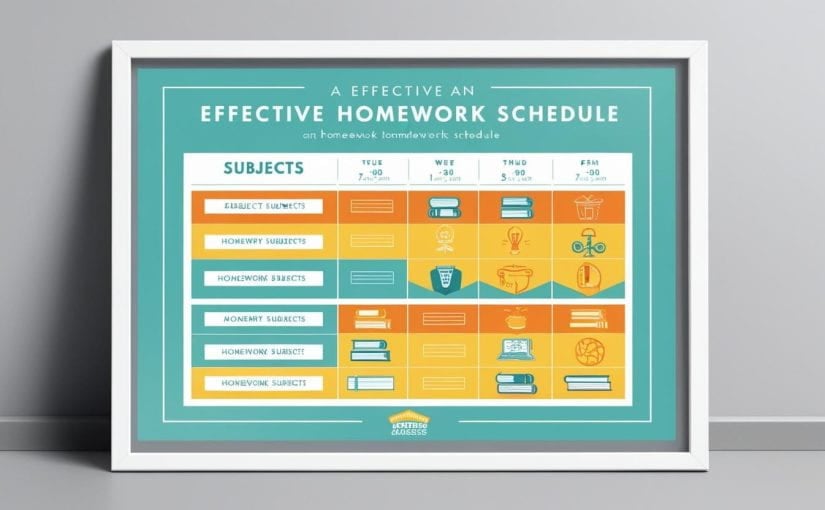
Homework can feel overwhelming, especially when you have a mountain of assignments and deadlines looming over you. But guess what? With an effective homework schedule, you can turn chaos into order and stay on top of your academic responsibilities. Let’s dive into the steps to create a schedule that works for you.

Ever feel like there just isn’t enough time in the day? Creating a homework schedule is like having a map to guide you through your tasks, ensuring you don’t lose track of priorities. A good schedule helps you avoid last-minute stress, boosts your productivity, and even leaves room for relaxation. Ready to organize your time like a pro? Let’s get started.

Understanding Your Homework Requirements

Before you can create a schedule, you need to know exactly what you’re working with. Here’s how to get a clear picture of your workload.

Identifying the Volume of Work

Start by listing all the homework you have. Break it down by subjects and types—essays, problem sets, or projects. Assign an approximate time you’ll need for each task. For example, math problems might take an hour, but writing an essay could need two or more.

Analyzing Deadlines

Once you know your assignments, sort them by due dates. High-priority tasks with close deadlines come first. However, don’t neglect long-term projects—work on them a little every day to avoid a last-minute scramble.

Setting Realistic Goals

Goals act as your roadmap, ensuring you’re not just busy but productive.

Defining Daily Objectives

Break your tasks into bite-sized chunks. Instead of “Finish history homework,” try “Read 10 pages of history and outline key points.” This approach keeps things manageable and motivates you as you check off each accomplishment.

Weekly Planning vs. Daily Adjustments

Plan your week in advance but allow room for flexibility. Some days you might finish quicker than expected, while others might need extra effort. Adjust daily goals as needed, but stick to your overall weekly targets.

Allocating Specific Time Slots

The magic of a schedule lies in allocating your time wisely.

Time Blocking Techniques

Dedicate specific time blocks for homework. For instance, reserve 4 PM–6 PM daily for schoolwork. Stick to this routine to build consistency. Don’t forget to block time for breaks and hobbies—it’s all about balance.

Identifying Your Peak Productivity Hours

Are you a morning person, or do you thrive in the evening? Plan challenging tasks during your most alert hours. For example, if math requires extra brainpower, do it when you’re naturally more focused.

Creating a Comfortable Study Environment

Your environment plays a crucial role in how productive your homework sessions will be. A cluttered or noisy space can sap your focus, while a well-designed study area can keep you motivated.

Setting Up Your Workspace

Choose a spot that’s quiet, well-lit, and free from distractions. Ideally, your study area should have a desk, a comfortable chair, and all the supplies you need—pens, notebooks, a calculator, etc. Personalize it with a touch of creativity like motivational quotes or a small plant to make it inviting.

Minimizing Distractions

Distractions are your schedule’s worst enemy. Keep your phone on silent or in another room. Use browser extensions to block distracting websites, and if noise bothers you, consider white noise apps or noise-canceling headphones. A little effort here can save you hours of lost focus.

Using Tools and Resources

There’s no need to reinvent the wheel when technology and resources are here to help you streamline your schedule.

Leveraging Apps and Planners

Apps like Google Calendar, Todoist, or Notion are great for organizing tasks and setting reminders. Prefer the traditional route? A physical planner can work just as well. Jot down your assignments, deadlines, and planned study hours to keep everything visible and manageable.

Seeking Help When Needed

Stuck on an assignment? Don’t hesitate to ask for help. Whether it’s your teacher, a tutor, or a friend, getting clarification early can save you from wasting time later. Group studies can also be beneficial, as long as they don’t turn into social hours.

Building Habits for Consistency

Consistency is the key to success. A well-crafted schedule only works if you stick to it daily.

Sticking to the Schedule

Set reminders on your phone to start and stop your homework sessions. Keep a visual checklist to mark completed tasks—it’s oddly satisfying and keeps you motivated. Be disciplined, but also give yourself grace if you miss a day; just pick up where you left off.

Regular Reflection and Adjustment

Life isn’t static, and neither should your schedule be. Spend a few minutes each week reviewing how well your plan is working. Are you consistently finishing on time, or is there a bottleneck? Tweak your approach as needed to stay efficient.

Balancing Homework with Personal Time

A good homework schedule doesn’t mean sacrificing your hobbies, family time, or sleep. Balance is crucial for long-term success.

Incorporating Breaks

The Pomodoro technique—working for 25 minutes and then taking a 5-minute break—is a fantastic way to keep your mind fresh. Regular breaks improve focus and prevent burnout. Use these short breaks to stretch, grab a snack, or simply breathe.

Prioritizing Relaxation and Sleep

Don’t forget that relaxation and sleep are non-negotiable. An exhausted brain can’t function efficiently. Set a bedtime that allows for 7-9 hours of sleep, and make time for activities you enjoy. This balance will keep you energized and ready to tackle your homework.

Troubleshooting Common Problems

Even the best schedules encounter hiccups. Knowing how to address these issues can save your plan from going off the rails.

Dealing with Overwhelm

Feeling overwhelmed? Break your schedule into even smaller tasks and focus on completing just one thing at a time. Remember, progress is better than perfection. Take deep breaths, step back, and re-prioritize if needed.

Adjusting to Last-Minute Changes

Sometimes, emergencies happen—a surprise test or an unexpected family event. In these cases, reassess your schedule and move non-urgent tasks to another day. Flexibility doesn’t mean failure; it means adapting to stay on track.

Conclusion

An effective homework schedule is your ticket to conquering academic stress and achieving better results. By understanding your assignments, setting goals, and balancing work with personal time, you’ll find it easier to stay organized and productive. So why wait? Start creating your schedule today and watch your efficiency soar.